Today I want to clue you into 5 Internet marketing myths that keep a LOT of people from ever seeing any success.

Usually people believe these and never even get started.

I’ve had my own business for a long time now. If the e-mails I get every single week from my readers are a good measure (and I think they are), LOTS of people believe these.

It’s sad, because these myths have never been true, as far as I know. But they hold people back.

I’ll not only tell you what the myths are, but I’ll also tell you the TRUTH for each one…and how to turn it to your advantage.

——————————————-
Myth #1: You Need To Be Technical Genius
——————————————-

Not even close!

When I started I knew nothing. I’m STILL not the best technical guy around. It really doesn’t matter.

This stands in the way of lots of people even trying to start their own Internet business, and that’s silly.

Honestly, you can have an ugly website and still make serious cash. I’m not saying that’s a guarantee, but you definitely do NOT need to be a technical wizard.

Now, if you really want to succeed online, you typically do need a website, but here’s the thing…you do NOT need a complicated one.

You can probably hire somebody at Elance.com to make you a simple website for $100 or less. Or you can do it yourself with free tools.

You’ll need to learn a few things, like maybe some HTML basics, but you don’t have to be super programmer or anything like that.

This actually gives you a big advantage.

Most people waste time and money building beautiful websites before they even know there’s a market for what they want to sell.

If you start very simple, you can figure out if there’s a market FAST, then really cash in.

——————————————-
Myth #2: It Costs A Ton To Get Started
——————————————-

No way. In fact, it doesn’t have to cost much of anything.

I won’t say it costs absolutely nothing, because I recommend that you have at least $250 to spend on things like an autoresponder account, maybe a simple website from a freelancer, and so on.

But that’s all the expense I’m talking about.

You don’t have to spend thousands on every expensive gadget, gizmo or graphic.

Google is your friend here.

When I first started, I wasted so much money on stuff I didn’t need. You can avoid that mistake and start by searching for no-cost resources on Google.

That goes for everything from things like a website, to courses to help you learn skills you need.

For example, I offer several no-cost courses and I’m not the only one. There’s lots of help out there.

One other possibility (a great opportunity for you) is to hang out in marketing forums and find people with the skills you need.

When you find a good prospect, you can offer to do something for them if they’ll give you what you need.

Believe me, you have at least one skill that other people will consider valuable. Maybe you can write, or draw, or make videos, or create simple websites, or think of good product ideas. Anything you can contribute is fair game.

This is a great way to meet people, and you can also get a nice profit opportunity out of it.

If you find somebody you work well with, you can propose a joint venture (JV) and split the profits. You’ll already have a good relationship, so you can take it to the next level VERY easily.

I’ve done this myself with several people, and it has been extremely lucrative for me.

——————————————-
Myth #3: You Have To Be A Niche Expert
——————————————-

You most definitely do not when you’re first starting.

All that really counts is that you have to provide helpful information at a compelling price. Really, that’s it.

Look, very few people are niche experts right when they enter a new niche. Instead, they learn a little bit, create a nice entry-level product, then tiptoe into the market.

As they learn more, they grow their product offerings more.

Their reputation grows over time.

I’m not saying you can’t be a niche expert from day one. If you’re already an expert at something (like sailing, or pet training, etc.) then go ahead and describe yourself as an expert.

What’s true for everybody, though, is that unless you’re famous offline, nobody’s going to know you online, even if you really are an expert.

It’s much wiser to BECOME an expert by being in a niche for a while.

You can actually make a killing that way, and I’ve proven it myself.

Years ago nobody knew who I was online. But I had written some very successful promotional e-mails, and some marketing friends of mine said I could create a product out of that.

Now, like I said, I wasn’t known as “the e-mail expert.” But I knew what I was talking about, and LOTS of people wanted to know how to write an effective e-mail.

So I created a product about it and built a reputation in the e-mail marketing niche.

You can do the same thing.

——————————————-
Myth #4: You Don’t Need A Product
——————————————-

I bet that’s not the myth you expected. You probably thought I was going to say that people assume they need a product, when they really don’t.

That’s sort of true and sort of not.

You definitely don’t need to have your own product when you first get started, but believe me when I say it’s a HUGE advantage.

Having your own product gives you an asset that can pay you back in multiple ways:

* You can sell it for a profit

* You can reuse the content for other things

* You can sell resale rights to the product and make serious cash on that

And there are more options.

The point is, I think you DO need a product, and it’s very easy to create one.

All you have to do is research a topic you’re interested in.

You can start at an article site like EzineArticles.com, but also use Google to find websites about the topic.

Then write up a short report, maybe only 5-10 pages, chock full of helpful information.

You can sell that for $7 pretty easily if you have a good title that promises to give readers some bit of information they desperately want.

For example, you could write a report about how to beat a speeding ticket, or cure a common ailment, or do something seemingly difficult like buying a good used car. Anything helpful can work.

Once you have your report, you can make an audio version using a free software tool like Audacity. Or you can record a video with YouTube.

Really, creating your own product isn’t hard. The mistake people make is trying to create too fancy a product. Keep it simple to start, and you should be fine.

——————————————-
Myth #5: You Need An E-Mail List
——————————————-

I’m not going to say having an e-mail list isn’t great. It sure is. I love my list, and I wouldn’t trade it for the world.

But you do NOT need a list to start with.

In fact, it’s best if you don’t start with a list, because it forces you to build one.

The best way to do that is to find a good market full of hungry buyers. Google lets you do all the keyword research you want for no cost, so find keywords that get healthy traffic but not killer competition (those are “long tail keywords” by the way).

Those micro-niches are a great place to start a list.

Once you find them, you can do one of two things:

* You can offer an inexpensive initial information product, like I described before, or

* You can do the same work to create a report and…get ready…offer it for free!

I LOVE that second option. It’s a great way to go, because you don’t have to worry about selling anything to start with.

Focus on offering truly helpful, valuable information to start with, and get people on your list. Then you can offer them an inexpensive “starter” product, and you’ll probably get lots of buyers.

I’m telling you, if you’ll do that, you’re miles ahead of most people. Most people either don’t build a list at all, or they focus on offering a big product first.

I initially didn’t build a list at all. I worked night and day for months to get visitors to offers, but I didn’t capture a single e-mail address.

That mistake literally cost me years. Please don’t do that to yourself.

It’s much smarter to start small, attract visitors with a no-cost (or low-cost) offer, and build a list from the first day.

In fact, that’s the general advice I’ll leave you with.

Skip right past these myths, because they’re not true. Instead, ignore them and do very simple things that can get you moving FAST.

If you’ll do that, you can shortcut the success process like you won’t believe.

I hope this helps and I’ll talk to you soon.

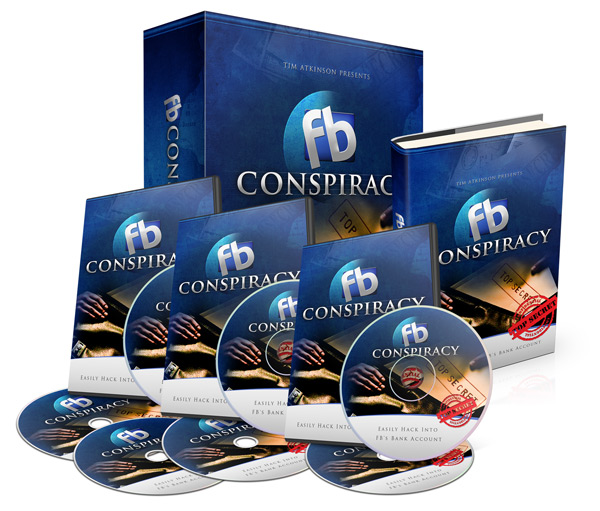
FB Conspiracy

1,200 copies of FB Conspiracy was recently sold at the Warrior Forum for $27 but you can pick up your legitimate copy for just $17 and get some neat bonuses as well!

FB Conspiracy is a video tutorial series showing how to get traffic and make serious conversion from Facebook PPC. It is a great product from Tim Atkinson, known as one of the expert in Facebook PPC.

Here’s what you get:

- How to set up high converting ad campaigns

- How to get your ads approved and to keep them approved

- How to get ads approved to any “make money” product you want

- How to not pay more than 75 cents for a click ever

- How to spread out your ads such that your audience can’t help but see them everywhere—they will have no choice but to click your ads!

- The FB Conspiracy Mindmap: This mindmap alone is worth triple the cost for the course.

- Also automation, tracking and other cool tools that you will love

There’s no better time than to act NOW to get this.

Same Marketing Form/Approach, Different Responses

Just because a prospect says no to your offer/opportunity today, does that mean they’ll have the same response when the offer is presented in a different manner at a later point…or even the same fashion at a future point in time?

The short answer is “no”, but let’s dig in a bit deeper.

Think about this for a moment. How many purchases have you made where the company made several attempts at getting into your wallet before you finally caved in and bought?

Even if the item was relatively inexpensive, it may have taken them several efforts/attempts before finally luring you in.

If you were just marketing online and that was your only means of communicating with your audience…regardless of how many times you present your offer, even in many different ways…you’re leaving cash on the table. Likely, lots of it.

If you were only using the telephone as you’re primary marketing tool the same would apply—at the end of the day, you’d be costing yourself piles of cash.

Same goes with direct mail, print advertising, TV and radio as well.

The fact of the matter is, there are numerous reasons prospects don’t buy something on your first attempt. Timing, your unique selling proposition stunk, the offer wasn’t “perceived” to satisfy their “big dilemma”, weak urgency and “reason why”, fear of loss or risk because no strong guarantee was in place, maybe they just didn’t believe you…the list goes on and on.

“The Fix”

Multiple channels of communication. When we put our offer in front of our prospects not only in multiple ways, but also in a slightly different light…your overall closing numbers increase.

For example: Let’s assume that someone was only using the Internet to bring in new business. You’re doing everything buy the book…you’re building a list, creating relationships with your prospects, providing valuable and timely information…and good offers that they can purchase from you.

There are a few major dilemmas with only using this approach…

1. Your “open rates” on your e-mails will never be 100%…or even remotely close to that—immediately, you’re already diluting the quantity of prospects that are approached by your smoking hot solution to a big problem they have.

2. Your “click rates” or the amount of prospects that click on the link in your e-mail will never be the same as your “open rate” of the e-mail. Again, more “dilution” takes place. Don’t get me wrong…the Internet is a great place to market products/services and make an absolute killing—I’m making a case that we should be communicating our messages in multiple channels. Bare with me for a quick moment as the “tie in” takes place…

3. Your “buy rate” of the people that do click on the link may be 1-3% (from first-time exposure, this number should dramatically increase as you continue driving prospects back to your sales message and they get exposed to your products multiple times.

What if one was just marketing using the telephone? Similar, yet different restraints take place using any marketing medium.

1. You have disconnects/wrong numbers.
2. Sometimes, the prospect just never picks up their phone.

Continued “dilution” or lack of “offer exposure” takes place here as well.

I’m using the phone and the Internet as examples to establish a main point (we could have added direct mail, TV, radio, etc. as they each have their own constraints that can cause dilution to take place).

Critically important here: Market your solutions to prospects in a variety of different ways. The more “channels” you’re using the greater your overall closing percentages of data will be. One can realistically double, triple or more the total number of recruits, sales, orders etc. by following this one plan of attack. As Dan Kennedy says, the number “1″ is the absolute worst number in marketing. Don’t just market your products/services to your audience using 1 “channel” to communicate your message.

With that said, we also need to start with the number 1…get really good at one thing, gain a skill set, test, tweak and make the appropriate adjustments. Then, let’s go add another “channel” to your plate. Starting with several items at the same time can lead to frustration and a hole in your wallet as well (I speak from experience here).

Quite realistically, this can literally mean the difference between closing 2-3% of your total leads VS closing 8-10% or even greater by communicating using different tools of marketing to distribute your message. Expand your reach and approach your audience using different “tools” in your marketing bag of tricks.

Have an understanding that just because your offer wasn’t appealing today (for whatever reason) doesn’t mean it’s not going to be attractive to them at a later point in time. It may also be more appealing by modifying or tweaking the offer and presenting it to them using a different “channel” (i.e. phone, Internet, direct mail, etc).

Don’t rely on “one” tool to get the job done. If you’re looking to drastically elevate your closing rates, use different approaches with your offer, communicate using multiple “channels”, test different offers to the same audience, remove the risk for them to make a purchase, give them “reasons why” to take action immediately and create enough value and benefit in your offer where your prospect would have to be brain dead or drunk to turn down the solution you’re offering.

Mobile Traffic Guru Paid $100K For This…

Posted August 30th, 2011. Filed under Traffic Generation

I haven’t seen this much “buzz” about a new product in Internet marketing for a while…

Maybe because it’s *rare* to see something that introduces something totally NEW — and at just the right time for you to jump in and make an easy killing.

Mobile traffic super affiliate Tim Donovan recently flew underground traffic genius Nick Lewis out to Los Angeles…

And paid him over $100K to teach him his patented “Fast Traffic” techniques.

I think that has to be some kind of record for a “non guru”.

Now (if you hurry) Nick’s letting you grab his entire Fast Traffic Formula for $99,953 less then Tim paid for the same secrets.

I mean it — you’ve NEVER seen this before. This is even new to me, and I’ve been in this game for a while, and right now it’s incredibly EASY to make it BIG in Internet Marketing for pocket change — way easier than PPC, SEO, article marketing or any of the “same old” tactics that are just about impossible to “break into”.

Don’t wait on this — you can literally be making money this afternoon, so you owe it to yourself to find out what all the “buzz” is about right here.

I’m offering a brand new tool for my readers at a special price of just $11! MobiSitePro creates mobile-ready websites with “fill in the blank” ease, and includes an easy-to-use editor, newsletter signup, as well as QR Codes, all right from inside your control panel.

Installation is super simple, just upload it to your site and you’re done!

MobiSitePro can easily sell for $97 when you see everything that’s included, so take my advice and get your copy while it’s just $11…

If you’re an affiliate, you can earn 100% instant commissions for your referrals, details on download page.

It can take time to build your presence in the search engines using link-building, and there is often a disconnect between when we make the effort to gain links and when those links begin to pass influence to our site. This can cause us to overlook time-efficient means of getting links as unsuccessful and give up on the idea of link-building as too dark, difficult and confusing. This does not have to be the case, however. We just have to recognize what is important about links and keep track of these important elements for our different link-building methods.

There are a number of factors that can affect the quality of a link-building campaign, and it is important that you can analyze your links in a way that will enable you to get as many of the links that give you the best return. Furthermore, there are hundreds of different methods of link-building, and you should be aware of how long it takes to get a link using each of these methods, how much it costs, and how much value you get from each of these different sources in order that you can get to where you want to go as quickly as possible.

Lets take a look at the factors that affect the cost and value of links, and although I can’t provide you with a simple piece of analytics software to help you account for each of your links, I can give you a few ideas that will help you track what is most important and get a more accurate picture of what you should be doing more of.

Cost & Value:

In order to run a successful link-building campaign, it is important to have a means of analyzing the cost and value of your links over time. Without it, you won’t be able to focus on the link-building methods that give your site and your business the greatest return.

There are a number of ways of doing this that will depend upon the way you work, but here are a few things that you might like to take into account:

Cost per link:

  • What has it cost to get this link in terms of domain registration and hosting?
  • What did it cost to research this particular link in terms of tools, subscriptions and staff time?
  • Is this link still being indexed after any given period (six months, a year)?
  • What are the costs of keeping the link indexed over time (juicers, pumpers, etc.)?

Over time, we should be looking to get as many links for as cheaply as possible. In order to do that, it is important to keep track of the costs associated with link-building. There are many different methods of link-building, and each of them involve different amounts of time and infrastructure.

A round of directory submissions might not take long, but they might not get into the index or remain in the Google index over time. Links from web 2.0 sites like Hubpages, by contrast, won’t cost anything in terms of hosting, but it will take time for someone to write the Hub and to maintain it in order for the link to be able to pass influence. Finally, it might take a long time to get a guest post on a good blog, and it might take time to prepare a relevant article that interests the audience, but the influence should keep your link in the index for many years to come.

When evaluating links, we can’t just get hung up on the cost of a link; however, as we might limit ourselves to going after the cheapest links from places with little PageRank. We also need to have a means of taking into account the value of links from any given source.

Value per link:

The value of a link is what it gives you in return for the time and money you have spent getting it. This value depends upon the quality of the link. This quality is ultimately determined by its ability to improve your search engine rankings. There are a number of factors that can affect the ability of a link to do these, and here are a few questions that you can ask in order to help you assess these factors:

  • What is the page rank of the domain you are getting a link from?
  • How many other outbound links are on the page that links to your site?
  • How many links are coming into the page & domain that you are getting links from?
  • How many links are coming into the page & domain from different domains?
  • When was & how often is the page that is linking to you cached?
  • How long does the page that links to yours stay in the index?
  • Does the anchor text of your link relate to your keyword?
  • Is the domain linking to yours relevant to your website?

Not all links are born equal. Although it’s great to get a link from anywhere, Google’s corporate information tells us that links are analyzed like votes in a democratic ranking system. As well as just counting the number of votes:

“PageRank also considers the importance of each page that casts a vote, as votes from some pages are considered to have greater value, thus giving the linked page greater value.”

One useful way to work out the quality of your links is to analyze their PageRank. This is not easy to do as Google’s PageRank toolbar is infamously out-of-date and can sometimes be very misleading. Yet there are other ways of analyzing the importance of a page! SEOmoz has a toolbar that gives its own analysis of the importance of any web page by analyzing the number and quality of inbound links from different, unique domains. This can serve as a useful comparison with the Google toolbar. There are other factors, too.

When the infamous Google algorithm was originally created, it used the idea of a ‘wondering drunk’, suggesting that a web surfer starting from any given point has an 85% chance of continuing. The influence of each link of that page is 85% of the influence of the page divided by the number of links (so, if there are 100 links on the page, it’s 85% divided by 100).

Although the Google algorithm changes over time, there is a lot of sense in this and it is possible to see that the more links on a given page, the less value is passed along each link. In this way, a link from a page with a PageRank of 5 from a page with 10 outbound links will be 10 times as valuable as a link from a PageRank 5 page with 100 outbound links. This can cause a great difference in how you decide to invest your time as it might seem worthwhile to pay for links from directories or sites that have a high PageRank until you realize that many of these places have hundreds of outbound links that cause the influence of that page to leak away.

Taking the ‘wondering drunk’ theory further, this is an argument for getting more links into any articles that you post on other websites. If you manage to get one link into an article on a page with 9 other links, your link is worth 1/10 of the influence available on that page. If you get 2 links into that article, however, your links will get 1/5 of the value available.

Other factors that can affect the value of a link to your website are the relevance of the site that is linking to yours and the anchor text of your link. A link to your website that contains the anchor text ‘www.yoursite.com’ won’t help your ranking for the keyword ‘blue widget’ as much as a link that contains the anchor text ‘blue widget’.

Conclusion

Although link-building can take time and effort, and the results from link-building can take an even greater amount of time to show (it’s not as easy to get a sense of the cost and value of your links as it is to pull information out of Google Analytics) keeping track of the cost and value of each of your link-building efforts can help you to make better decisions about which link-building methods give your business the best long-term value.

Summary

COST PER LINK:

  • What has it cost to get this link in terms of domain registration and hosting?
  • What did it cost to research this particular link in terms of tools, subscriptions and staff time?
  • Is this link still being indexed after any given period (six months, a year)?
  • What are the costs of keeping the link indexed over time (juicers, pumpers, etc)?

VALUE PER LINK:

  • What is the page rank of the domain you are getting a link from?
  • How many other outbound links are on the page that links to your site?
  • How many links are coming into the page and domain that you are getting links from?
  • How long does the page that links to yours stay in the index?
  • Does the anchor text of your link relate to your keyword?
  • Is the domain linking to yours relevant to your website?

Extracted from StomperNet SEO Intelligence Report, August 26, 2011.

Dominating Niches

If you’ve been watching Chris Freville’s launch party for his new system, Dominating Niches, than you know why the buzz surrounding this is so intense.

There’s just never been a niche marketing system quite like this before.

Simply put: You can clone a forty grand per month niche dominating system over the next 30 days.

So if you’ve been dabbling in affiliate marketing, and getting frustrated by making only half of what could be 100% profit in your pocket…then you need what Chris has put together here…

I’ve yet to see another niche marketing system spell it out the way this one does.

Everything is laid out on the table.

This is the premiere step-by-step guide for locating, infiltrating and dominating lucrative niches within 30 days—he even guarantees it!

Crowded niche…untapped goldmine…doesn’t matter. Chris has his way with them all, and for the first time he’s revealing how he does it.

I just finished reading the product page…and I was surprised to see him reveal his secret psychology behind creating aliases. That’s usually the kind of insight you have to pay for…

But this page is a good example of how to do something I preach a lot: Make your ads valuable!

If you’re interested in taking your marketing to the next level and join the ranks of well-to-do and happy-go-lucky marketers living the life of their dreams…

…then you have to checkout this program.

The Sections Of Copy That Matter Most by Bob Bly

Posted August 27th, 2011. Filed under Copywriting

One of the most labor-intensive, time-consuming marketing tasks is copywriting.

Not necessarily writing the copy but agonizing over what has been written.

As a copywriter, I do this all the time.

I fret to an insane degree over every sentence, reading the copy over and over again, questioning whether the wording could be stronger.

It literally keeps me up at night.

Marketers I observe do the same thing.

They mark change after change on a nearly finished promo, agonizing over whether the copy says exactly the right thing, in exactly the right way.

The irony, of course, is that in most situations, all this agonizing is for naught.

I don’t mean to say that copy is unimportant.

But most of the time, it wouldn’t make one iota of difference in response whether we went with “version A” or “version B”.

So I DO think you should agonize over copy but I think you should do it with only a small fraction of the copy in your promotion.

Specifically, here are the 3 “hot spots” in your copy where what you say—and how you say it—really, really matters:

>> The first critical portion of the copy is determined by its position in the promotion.

The critical copy in a #10 direct mail package is the outer envelope teaser—and the headline and lead of the sales letter.

In a magalog, it’s the front cover, the inside front cover, the headline and lead on page 3 and the back cover.

These sections are worth stressing over, because different messaging can result in dramatic increases or decreases in your response rates.

>> The second critical area is copy describing the central message, theme, or idea of your selling proposition.

For instance, do you position your energy stocks newsletter as a way to hedge your portfolio against a bear market triggered by rising oil prices?

Or do you talk about how the reader can profit from the “next big thing” in energy investing—which, according to your editor, is that crude oil will reach $200 a barrel by the end of the decade?

The “big idea” of your promotion—and the way you express it—really matter.

>> The third area where copy is critical is in the offer and on the reply element.

Offering a “free information kit,” for instance, usually generates more leads than the vague “send for more information”—the idea of a “kit” somehow being more tangible and sounding more valuable.

On the order form, changing even one word in the copy can mean the difference between a winner and a disaster—for instance, “$100 a year” vs. “$8 a month” or “10-day money-back guarantee” vs. “90-day money-back guarantee.”

It is worth your time—and your copywriter’s—to polish and fine-tune these areas…headlines, leads, offer, theme, and big idea…until you finally feel confident that what you’ve written can work.

You could spend the same amount of time agonizing over every other page of copy in your mailer, but since most of it won’t make much difference either way in the response and sales generated…well, why bother?

Bob Bly is the author of “World’s Best Copywriting Secrets” and has written copy for more than 100 companies including IBM, Boardroom, Medical Economics and AT&T. He is the author of more than 75 books and a columnist for Target Marketing, Early To Rise and The Writer. McGraw-Hill calls him “America’s top copywriter”.

New and Improved PLR Crash Course Pack

Posted August 27th, 2011. Filed under E-Mail Marketing

As more and more folks start their own online business, there’s going to be a glut of promotions and information on the Net. The best way to be outstanding is to continually outdo yourself in terms of quality. One of the best way is to provide an e-course series, yet so few people care to prepare such a series of lessons.

Let me just say all the work is done for you now! You can get 25 top-notch e-courses and newsletter series that are informative, professionally written and formatted for easy editing. Just simply edit the text to reflect you and your company and queue them into your autoresponder and you’re DONE!

Use these messages to provide high quality, useful information to your readers and attract new subscribers. The price is a measly $4.95, but the return on investment is going to be huge. Download your PLR Crash Course Package now!

The Bible Of Affiliate Marketing

Posted August 26th, 2011. Filed under Affiliate Marketing

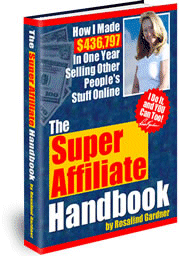
Super Affiliate Handbook

Known as the ‘bible’ of Affiliate Marketing, Rosalind Gardner’s Super Affiliate Handbook is a MUST-READ for anyone who wants to become an affiliate marketer.

In a style that is friendly and humorous, the Super Affiliate Handbook is peppered with real examples of what Rosalind did to become one of the most recognizable Super Affiliates in the world. And she doesn’t just tell you what she did right—she exposes the mistakes she made as well—to help you avoid potential problems.

Exceptionally well written, Super Affiliate Handbook covers absolutely everything you need to know about making money as an affiliate marketer. In 220+ pages, you’ll learn how to pick the best programs, negotiate a commission raise and save time, money and effort on everything from affiliate software to web hosting.

I HIGHLY Recommended it.

How To Set And Get Your Price by Bob Bly

Posted August 26th, 2011. Filed under Business

Ask most experienced direct marketers, “What’s the best price to charge for my product,” and the answer will be: whatever the market will bear.

In direct marketing, we can test prices and quickly see which is the most profitable at generating the highest return on marketing dollars (ROMD).

Surprisingly, tests show that higher prices sometimes generate more orders than lower prices.

In one classic test, a publisher was offering a loose-leaf service teaching presentation skills to business executives.

When they tested $197 vs. $297 in their advertising, $297 was the winner.

Most direct marketers conclude that you should test prices, and if the higher price wins, go with that.

While this is a sensible strategy in most instances, are there any reasons NOT to charge top dollar—or any situations in which charging a too-high price may come back to bite you—even if your price tests show the higher price is the winner?

I can think of several such situations.

The first is when pricing professional services.

GD, a pricing expert, once told me that the ideal price level for your professional services is in the middle of the top third and NOT “the most you can get”.

Let’s say the hourly rates for service providers in your industry range from $100 at the bottom to $400 at the top.

You don’t want to be in the lower third of the price range, charging $100 to $200 an hour, because prospects equate a bargain price with an inferior quality product or service.

Pricing in the middle range, at $200 to $300 an hour, isn’t bad. But it just makes you one of the herd—a commodity.

The top range is an hourly rate between $300 and $400. So by following GD’s advice, we would set our hourly rate at $350, smack dab in the middle of the upper third.

This is high enough that we are perceived as a top professional in our field, but not so high that we are always the most expensive supplier.

Well, if you are the highest-priced provider in your field out there, you will cause prospects to hesitate before hiring you.

“Every time you give your clients an estimate, they will strongly consider bidding the job out for competitive quotes rather than just signing your agreement,” said GD.

“One day soon, they will try someone else, find they get equivalent service for a lower price, and you will never hear from them again.”

Another problem with charging outrageously high prices is that it creates ill will between buyer and seller.

The buyer feels ripped off, and complains loudly about things he might otherwise let pass.

Also, if you charge a premium price and you fail to deliver the results you promised, that client will never hire you again…and will badmouth you to others.

Here’s another sign that your prices are too high: a spike in the refund rate.

So how do you put a logical limit on your pricing?

My friend, information marketing guru Fred Gleeck, has a simple rule.

“I don’t sell a product unless I truly believe that the content is worth at least 10 times the price I am charging,” he says.

Then there is the ethical question: given our free market society, is it OK for a drug company to charge a price for a proprietary medication that only the wealthiest patients can afford, especially when doing so effectively sentences poor people with the disease to death?

Fortunately, most of us don’t market products that people absolutely can’t live without, though some of us price our products as if that were the case.

However, no matter what your pricing is—high, low, or in between—rest assured that some folks will complain about it as being unfair.

Is there a way to prevent consumers from protesting against your high prices?

Yes, by offering them different options for getting your information or knowledge as follows.

>> The premium consulting service: a high level of personal service rendered by you or another top specialist and priced accordingly…in the thousands of dollars.

>> The mid-range coaching service: the customer does most of the work, but you offer advice, support, and encouragement through weekly telephone calls, online help, or some other mechanism with a service component.

>> Information products: you sell a manual, DVD, or audio learning system that teaches people how to solve the problem themselves. It’s entirely packaged, reasonably priced (in the hundreds of dollars), and involves little or no personal service or support on your part.

>> A book: a how-to e-book or traditionally published book giving advice on your topic…sells for anywhere from $10 to $50.

>> Free content: how-to information delivered at no cost via your blog, podcasts, free Webinars, e-newsletters, special reports, content-rich Web sites, or other advice you give away.

Having the low-priced options above—the inexpensive book and the free e-newsletter—makes it virtually impossible for consumers to complain that you are too expensive or unfairly priced.

You simply point out that if the prospect can’t afford your high-priced products and services, they can avail themselves of your knowledge through your books or free online content.

By doing so, you avert potential criticism of you as a greedy opportunist, and can sleep nights knowing bitter people who can’t afford your premium offers are not going around besmirching your reputation.

Or at least not doing so loudly.

Bob Bly is the author of “World’s Best Copywriting Secrets” and has written copy for more than 100 companies including IBM, Boardroom, Medical Economics and AT&T. He is the author of more than 75 books and a columnist for Target Marketing, Early To Rise and The Writer. McGraw-Hill calls him “America’s top copywriter”.

What Not To Do When Selling Your Services by Bob Bly

Posted August 25th, 2011. Filed under Business

Many years ago, I taught a class at the Learning Annex in New York City on how to make a six-figure income as a freelancer.

One student, JR, wanted to break into writing TV commercials for Madison Avenue, and he had devised what was (according to him) a brilliant marketing strategy for getting hired.

In actuality, it was the second-worst marketing idea I’d ever heard in my life.

JR had, he told the class, written some “brilliant” TV commercials.

The Super Bowl was only a few weeks away at the time.

JR’s marketing strategy would be to show up at the offices of Madison Avenue’s biggest ad agencies and show the copy for his commercials to the creative director.

The creative director, he reasoned, was under tremendous pressure to produce a great Super Bowl commercial for the
agency’s clients.

By bringing those great commercials with him, JR would save the day—and be hired at an enormous salary to write for the agency.

Of course, this is a terrible idea for all the obvious reasons:

>> With the Super Bowl only a few weeks, all the commercials had been written and shot weeks or months earlier—and were already in the can.

>> The creative director has never heard of JR. She doesn’t know who JR is or whether he has any qualifications or talent. So the chances of the creative director agreeing to see JR are miniscule to none.

>> JR has no knowledge of which of the agency’s clients actually are running Super Bowl spots. Even if he did know, he hasn’t been briefed on the product positioning or the campaign strategy…so how can he possibly write a commercial that achieves the client’s marketing objective?

I gently told JR—and the rest of the class—that doing work on spec for a client who hasn’t asked you to do so is an absolute waste of time.

However, stupid as it is, there is a marketing strategy that’s even worse: giving an unsolicited critique of something a potential client has done—a new product design, an ad campaign, a website—in the hopes of being hired to fix it.

Why is giving a critique even worse than doing work on spec without prior agreement by the potential client to review it?

Well, think about it.

You send a letter to a business telling them their website stinks…or their customer service people are idiots…or their product is lousy.

There’s a good chance that the recipient of your letter is the person responsible for approving that website, training the customer service staff, or designing the product.

So right away, you have begun the relationship by insulting them—saying, in effect, “You don’t know what you are doing.”

They probably don’t agree with you that they’ve done a bad job…or else they wouldn’t have produced the site, training, or product in the first place.

You come along and give a contrary opinion—highly critical and negative.

They think, “Who the heck are YOU, bub? Why should I listen to what YOU say?”

As they see it, your opinion is subjective, not objective.

It’s also self-serving: you are a vendor, so your goal in reaching out to them is to get them to hire you and spend money on your services.

Worse, here you are, spending your time reviewing websites, calling companies who aren’t your client, and telling them how bad their sites are—without being paid to do so.

This causes them to think that if you were really any good at what you do, you’d be swamped with projects—and not cold-calling strangers trying to rustle up work.

I’ve frequently been on the receiving end of this “you’re doing it all wrong and we can help you fix it” marketing strategy—especially from web designers.

And speaking as a prospect, I can tell you it not only doesn’t work with me, but it’s also annoying and offensive.

Just last week, I got yet another such call from a web designer.

“I was looking at your site and it really is poorly designed,” TN, the Web designer, told me. “I would love to help you improve its performance.”

“Do you know my marketing objective for my website?” I asked TN.

“Uh, no,” he admitted.

“Well, TN,” I said quite reasonably. “If you don’t know what I want the site to do for my business…and you don’t know its current performance metrics…how can you possibly know that you can improve it?

I let him stutter and stammer for a few seconds, before politely ending the call.

My friend RA, who once ran a mail order business selling information products for gamblers, was also a victim of the “you’re doing it all wrong and we can help you fix it” marketing gambit.

SH, a newbie freelance copywriter, wrote RA an unsolicited 2-page critique of his latest DM package.

SH closed his letter by suggesting to RA that his marketing results would be greatly improved by letting a “professional copywriter” (like SH) work his magic on it.

RA and I both had a good laugh over this…because RA is universally acknowledged (except by SH, who didn’t recognize his name) as one of the top direct response copywriters working today.

Irritated, RA sent SH a testy letter pointing out this fact…and also noting that the package SH thought was so terrible was in fact a blockbuster control—making SH look stupid and silly.

Conclusion: doing a critique OR work on spec for a potential client who has not asked for it seems, on the surface, a sensible approach to marketing your services.

But it is not. In fact, it’s the least effective marketing strategy for selling professional services ever devised.

My advice for you when marketing your professional or technical services is as follows:

>> Never give unsolicited advice or criticism.

>> Don’t offer solutions until you really know what the problem is—and the only way you can really understand the problem is for the potential client to tell you.

>> If you want to show the potential client how smart you are, stop pontificating. Instead, ask intelligent questions and listen to the answers.

Bob Bly is the author of “World’s Best Copywriting Secrets” and has written copy for more than 100 companies including IBM, Boardroom, Medical Economics and AT&T. He is the author of more than 75 books and a columnist for Target Marketing, Early To Rise and The Writer. McGraw-Hill calls him “America’s top copywriter”.

High Res Ecovers Pro…Special 44% Off

Posted August 25th, 2011. Filed under Graphics

High Res Ecovers Pro

I just uncover a special hidden link that give you 44% off to this product called “High Res Ecovers Pro“.

It normally sells for $67 but you can get it here for just $37.

Note that you need to have Adobe Photoshop to use these beautiful e-cover action scripts.

Just one more video…

Posted August 24th, 2011. Filed under Internet Marketing

You know the man’s name by now. He sold over $100 million worth of information products, advice and coaching in a bunch of different niches.

In this +85-minute video, he explains some of the trends that are making information products such a massive opportunity right now.

You’ll learn:

- What a “Modern Guru” is – and how they are the new success stories online (and helping others as they do it)

- The 12 parts of a successful “Information Product Business” – and why you need ALL 12 to succeed

- The dangers of making money “in the past”

- How the trends are changing, and what to do NOW so you can capitalize on what’s coming

- Why home-based businesses have a higher chance of success than businesses that are NOT run from home.

- Why so many more people are heading for tough financial times because they aren’t creating their own online “Information Businesses”

Go watch this now, it’s only going to be up for a couple of days.

Enjoy!

1 | 2 | 3 | 4

Affiliate Blogger ProRosalind Gardner is known around the world as the “Queen of Affiliate Marketing” earning up to (and over) one million dollars per year selling other people’s stuff online.

As author of the best-selling book on the subject, she has taught tens of thousands of people how to do what she does—build online businesses that are profitable and sustainable, even during these tough times.

Her book was FANTASTIC, but her recently released multimedia training program goes SO much farther!

Affiliate Blogger Pro includes:

* Step-by-step written tutorials
* Video training to SHOW you how everything works
* A super helpful and friendly community forum
* and much MUCH more!

And unlike so many gurus, Rosalind actually responds to members’ questions herself. She also has a team of experts who specialize in site building and design, copywriting and marketing.

What I appreciate most about Rosalind’s methods, is that she actually does what she teaches and you get to watch as she works her magic online…and learn how to do the same!

Too, she’s not into “here today, gone tomorrow” methods and training. Ros stands by her products & students for YEARS…so you can count on her over the long term.

I HIGHLY recommend that you invest in your future and join Rosalind’s training program today. With her guarantee, you have nothing to lose.

Affiliate Blogger ProRosalind Gardner is known around the world as the “Queen of Affiliate Marketing” earning up to (and over) one million dollars per year selling other people’s stuff online.

As author of the best-selling book on the subject, she has taught tens of thousands of people how to do what she does—build online businesses that are profitable and sustainable, even during these tough times.

Her book was FANTASTIC, but her recently released multimedia training program goes SO much farther!

Affiliate Blogger Pro includes:

* Step-by-step written tutorials
* Video training to SHOW you how everything works
* A super helpful and friendly community forum
* and much MUCH more!

And unlike so many gurus, Rosalind actually responds to members’ questions herself. She also has a team of experts who specialize in site building and design, copywriting and marketing.

What I appreciate most about Rosalind’s methods, is that she actually does what she teaches and you get to watch as she works her magic online…and learn how to do the same!

Too, she’s not into “here today, gone tomorrow” methods and training. Ros stands by her products & students for YEARS…so you can count on her over the long term.

I HIGHLY recommend that you invest in your future and join Rosalind’s training program today. With her guarantee, you have nothing to lose.

Free Report – 70 Traffic Secrets

Posted August 23rd, 2011. Filed under Traffic Generation

Get More Traffic

Here is a free report for you. It reveals 70 Traffic Secrets you can pick and choose to gain more traffic than your site can handle…

Get More Traffic NOW!

I want to share a very unique and inspiring story with you. This might sound like one of those stories that’s totally made up but it’s not. It is actually 100% true!

Omar Martin is an Internet Marketer whom I have known and personally written to for years. He was good at sales but he hated having to take orders from a boss.

One day Omar walked in and told his boss “I quit.”

For 18 months prior, Omar had been building an Internet Marketing business out of a spare bedroom in his house, and he’d finally got it to the point that he replaced the income from his dreaded job.

Cool story right…Well it gets better, and you’ll be shocked at what happens next…

* WATCH THIS VIDEO TO LEARN WHAT HAPPENED NEXT *

Omar went on to build a small empire online and he’s now doing something super cool to help others that want to break the chains of their JOB like he did.

Omar wants to give you the “Unfair Advantage” that we didn’t have! You see investing time and money in your business is one thing but knowing what to do is something all together different.

You can buy all the tools you want and you can spend hours upon hours in front of your computer…it’s inevitable.

You’ll still hit brick walls, you’ll still have unanswered questions…

YOU WILL STILL GET FRUSTRATED. But…

What if you had one-on-one help from someone that’s already done it? What if you had access to all the resources you needed to overcome the hurdles without having to buy product after product….

Best of all what if you didn’t have to pay an arm and a leg to get it?

You would definitely have an Unfair Advantage!

This is the coaching platform where you can have all the software and training you need under one roof, PLUS expert 7-figure marketers answer your questions ‘LIVE’ on a weekly basis.

Omar removed “money” from the equation of his life.

He’s been able to retire his wife and they both work from home “if and when they please”.

But we understand what it’s like to have a boss and have to cover the monthly expenses WHILE you’re building your
business…that’s why Omar’s about to show you how to EARN AS YOU LEARN.

And you can do it now with an Unfair Advantage.

Are you a Profit Insider?

Posted August 22nd, 2011. Filed under Internet Marketing

Profit InsiderA Profit Insider is someone who doesn’t believe in fake screenshots, empty million-dollar promises and push-button software.

A Profit Insider is someone who believes in making an effort and building a fresh business that generates high but realistic income.

There are ways to start a completely new business and generate 3 to 4-figure profits the next day, it takes effort but it’s very possible.

Discover a community and e-learning-based platform where members can share and discuss with one another and access ready-to-use tools and courses that will help you set up a fresh and legitimate business…

For only a one-time fee.

As marketers, we undoubtedly must create a wide variety of content in our chosen niche; in order make inroads into any online marketplace.

Some niche marketers are lucky. They already happen to be passionate and knowledgeable about a profitable subject; so creating engaging content comes easy.

However, most of us are not so lucky, and to have a profitable business, we need to get involved in markets that they initially know very little about.

Obviously, there’s no time to become an expert on every subject we approach. But you can’t expect to get away with the grade school tricks you may have tried when you didn’t actually read the book for your report.

Those tricks just won’t fly when it comes to your business. You need to learn the skills to write with authority on your subject so that people get a sense of trustworthiness from you, and are therefore willing to rely on your recommendations.

Fortunately, you can develop the skill of SEEMING like an authority without needing the deliberate practice or experience required to become a bona-fide expert.

And don’t worry, there’s nothing deceitful here. We’re simply presenting the information you already have in a way that will build rapport with your audience, and cultivate a leader/follower relationship.

1. Know Your Audience

This is overlooked by many writers who try to write to all readers. This tends to lead to dry, disengaging content.

So you should SPECIFICALLY choose your audience. Don’t write for everyone. Think about what you’re promoting, and think about the ideal consumer of that product or service. Don’t generalize. Be specific. It even helps to find a testimonial for a product and then pretend you’re writing your content as a letter to them.

Thinking this way will go a long way towards making your content engaging. When you have a specific person in mind, you tend to write in a more naturalistic manner. Since you’re targeting your ideal customer, your content will resonate more deeply with them, and this can lead to instant rapport and influence.

2. Identify Your Place In the Spectrum

Now we also need to identify the depth and breadth of information that already exists on your given topic. How much is there to know? How broad is the niche? How many sub niches are there? You really want to get an understanding of the “size” of your niche’s “world” – and you do this not by researching the subject, but by researching the PEOPLE who are interested in it.

You do this by finding the forums, blogs, and communities where your target audience congregates and discusses the topic. See how much they already know, and what it is they want to know more about. See where your audience falls in the “spectrum” of the available information on your subject.

Try to determine where in that spectrum your ideal consumer will fall, and then determine where YOUR experience level is, relative to them.

The goal here is to be slightly above where your target consumer is. We’re not shooting to be the expert, but rather someone with a level of knowledge only slightly higher and only slightly more experienced than the reader.

We don’t need to go for overkill, because in most niches,the BEGINNER level is where most of your potential customers are. Besides that, someone who is closer totheir peer level will be perceived as more relatable, and that’s a little bit of bonus rapport you can get that you wouldn’t if you came across as a high-falutin’ expert.

Another reason we do this spectrum exercise and study the actual people in the niche is because it will help you avoid promoting “beginner” material to someone who is already at the “proficient” level, and vice versa, will keep you from going way over the heads of “beginner” level folks with “expert” level stuff they just aren’t ready for.

3. Pick a Topic and Decide Your Stance

Now, by this time we know whom we are targeting, and we know how much they know, and we know how much (and what) it is they WANT to know more about. Now it’s time to give it to them.

First, you’re going to want to decide on your topic. This should be easy, as you probably got plenty of ideas from your earlier work. That’s why I want you to start by researching your audience first. 99% of the time they will TELL you what to write about so you don’t even need to think about it.

You want to make a note any time you see a question like “What is better…X, Y or Z?” This is a BUYER question. And best of all, it’s easy to research, because they’ve already given you X, Y, and Z to look up. Hopefully, you can get paid somehow for selling X, Y, and/or Z. If so, it’s perfect. If not, it’s still an opportunity to gain authority. Comparison and Contrast is a form of communication that implies authority for the author, because it’s inferred that you need to have some superior knowledge to write it.

Next, pick a definitive statement to make. Take a stand on the subject, draw a line in the sand. In the example above, decide which option you’re going to back, whether it’s X, Y, or Z. It’s very easy to decide – go with the majority opinion (you should know this from your earlier research). But be decisive. People who are asking questions are looking for someone to make the decision for them. Being decisive implies authority. (But don’t overdo it—see Section 5 below).

4. Triangulate and Source

First, find at LEAST three supporting sources that back up your stance. Again, this is easy, because you’re going with the majority opinion. When I say “Source” I mean that you want to credit the source of the supporting material. If it’s authoritative (like a brand name or a resource well known by the niche), quote it directly. If it’s just based on the opinions of strangers, simply cite it generally. Example: “Several other enthusiasts also agree.” or “The readers on Site X tend to share this opinion.”

What this does is demonstrate the breadth of knowledge you have on the subject. You know where the resources are, and you know what people think. Note, it doesn’t say anything about the DEPTH of your knowledge. Depth comes with actual experience and expertise. But when we’re talking about our general audience of internet searchers, you don’t need to be an actual expert on the subject—just being an expert in where to FIND OUT more about the subject will work by proxy.

Be sure that when you express your stance firmly, you also give information as to WHY you arrived at this decision. This usually makes it really easy to mention your sources as well as convey the kind of factual material you would see in a non-marketing article.

You should begin to see now that the sense of authority in the article comes primarily from the “frame” around the facts. The facts are just the same, but when you firmly establish who YOU are relative to who the READER is, you create the leader/follower relationship that is key to making referrals and sales.

5. Respect the Minority Opinion

Now, earlier, I said to go with the majority opinion when you take your stance. The majority is rarely wrong, and even if they are, they’re still the majority, so you won’t find many people disagreeing with your stance.

But that doesn’t mean you should ignore the minority opinion. You shouldn’t support it, but you should state it, and present the common argument against it.

This is another tactic to demonstrate your breadth of knowledge. An uninformed writer would find it easy to simply go with the majority opinion, and therefore isn’t as trustworthy. That effect is amplified when you’re marketing because people will find your presentation one-sided and it will seem like cheerleading or railroading.

By including the minority opinion, you make people think you really do know your stuff and actually broaden your audience to INCLUDE people who share that minority opinion. They may not agree with you, but by acknowledging their opinion, you legitimize them, which again, builds rapport with your readers.

Another good trick is to be less forceful in your presentation of the minority than you are with your stance.

Whereas your chosen majority stance should be rigid (i.e. X is clearly superior to Y and Z), you should be only mildly dismissive, and maybe even include faint praise for the minority (i.e. Y and Z are not really *bad* but they lack the features of X—hopefully the producers of Y and Z will serve their customers and add more features like X has). This demonstrates a sympathy and oneness with the consumer audience that will again, serve to garner rapport and influence.

In closing, remember: when it comes to writing as a marketer, keep it personal and direct. It’s less about WHAT you say and much more about HOW you say it.

Use the tips above and you’ll be amazed at how quickly you can become a “player” in any niche you choose.

How to Sound Like An Expert Without Being One

1. Know Your Audience
2. Identify Your Place in the Spectrum
3. Pick a Topic and Decide Your Stance
4. Triangulate and Source
5. Respect the Minority Opinion

Extracted from StomperNet SEO Intelligence Report, August 22, 2011.


Google Analytics integration offered by Wordpress Google Analytics Plugin