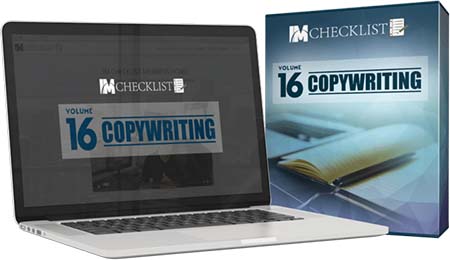
2,000 ways to sell more stuff!

Posted April 30th, 2013 by Nelson Tan. Filed under Copywriting

I’ve just spotted something cool you should have in your marketing toolbox.

Using the right words is critical when it comes to selling online, yet often the hardest thing we have to do is come up with the right ones to sell our own products…

I’ve you’ve ever sat frustrated trying to work out how to write a sales letter or watched visitors come and go without buying a bean then you know what I mean.

The solution (and one of my own secret weapons) is a “swipe file”.

This one is one of the best I’ve ever seen offered and at a tiny fraction of the price most top copywriters charge!

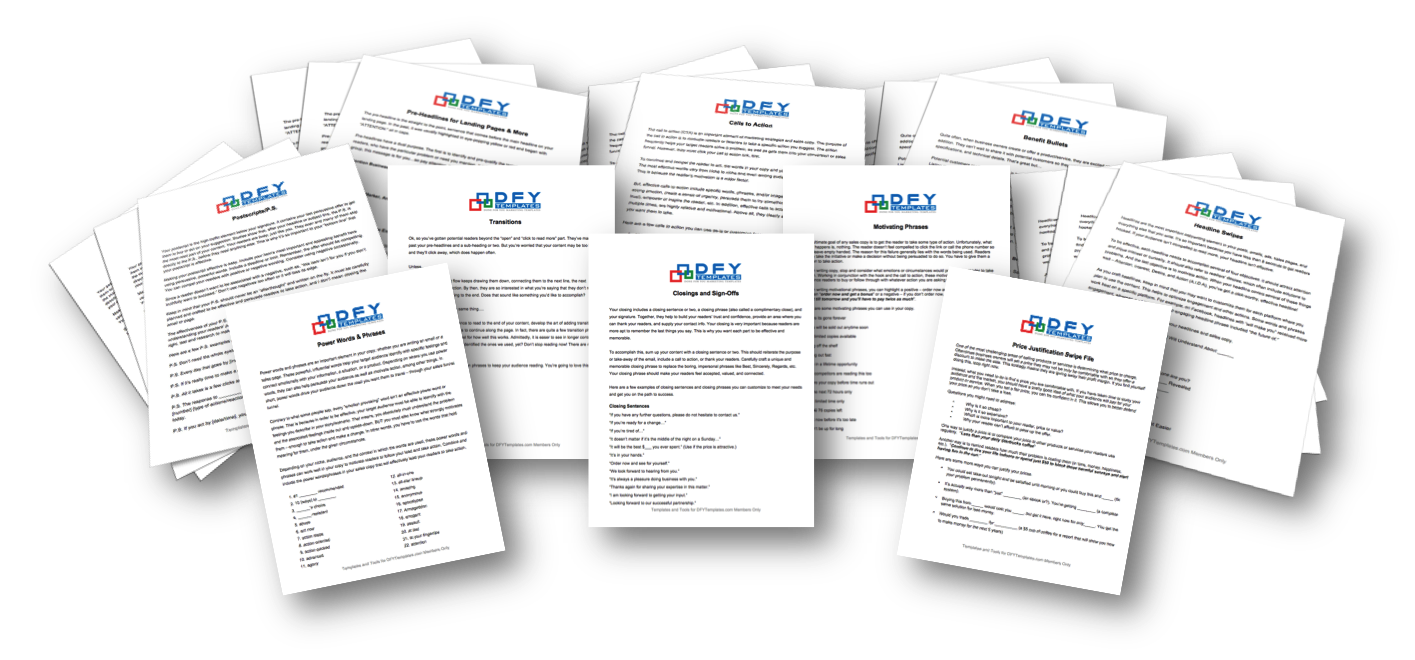
It’s jam-packed with over 2,000 swipes with everything you’ll ever need inside.

Whatever you’re selling or promoting online is covered and there’s MUCH more.

You can copy and paste them into your sales letters, squeeze pages, promo e-mails, blog subject lines and more.

In fact it comes with an awesome bonus package of templates too.

Don’t miss the “Ultimate Swipe” collection.

AdvantageBot

It’s easy for marketers to say you must do split-testing to gauge results and identify the rooms for improvement.

But testing variations of your own work takes a lot of time to yield a breakthrough.

Do you know you can already test yourself against ready benchmarks?

If you promote/sell anything online or offline, then without a doubt you need this one software on your desktop.

This software does something you probably haven’t heard before: text scoring. Text scoring predicts if the words you wrote would get a better response. This software called AdvantageBot also has a database of 200,000+ ads to search into, so that it can suggest words and sentences that generate the best response, the highest conversions and the fastest route to profits.

You can now get AdvantageBot at 50% discount while it lasts!

If you want more click-throughs on ads/promo materials…
If you want extra sales create headlines & stronger copy…
If you want a great product name or tag line score it first…
If you want to create tweets or social posts that get shared…
If you want higher open rates score e-mail subject lines…

As long as you use text (and the spoken word such as video scripts) to sell, you can use AdvantageBot to predict your way to better sales conversions!

An essential skill that a successful Internet marketer needs to master is the ability to build a subscriber list via setting up an effective leads funnel system. If the success of your business depends on your ability to convert web visitors’ interest into opt-ins, then you must know how to fit all the elements together.

First, your leads funnel system must have a landing page that prompts the visitor to opt in to your newsletter or mailing list. One way of doing this is to offer a free multi-part training course which you can distribute via an autoresponder once your prospects sign up. This course needs to be both interesting and educational as well as relevant to any products that you will be promoting intermittently to the list. Many prospects will not buy on their first visit to your website but often do on subsequent visits so you need to give them a good reason to return.

Second, your system must build trust and a relationship between you and your prospects. The free training course will help with this as well as give away any free information that you have about the wider niche which it is concerned with.

Usually, after the 6th or 7th mail, you can send out your first ‘commercial’ e-mail (read this post on how to draft one) as your readers should become better acquainted with you through your writing. The e-mail has a link to an affiliated product or your own product, which means you are going to design a sales page for it. If that’s the case, then you need to grasp some key principles of a successful sales message.

1. Use the AIDA formula – Attention, Interest, Desire, Action.

Attention – you need to grab the prospects attention with a strong and powerful headline.

Interest – you need to grab the prospects interest with a strong sales pitch. One of the most effective ways of doing this is via the telling of a story. A strong narrative has been proved to engage the reader’s interest and make them keen to carry on reading through the whole message

Desire – you need to build the prospects desire by emphasizing the end-user benefits of using your product. Clearly demonstrate how your product will help the prospect to solve the particular problem or issue that the product is aimed at remedying.

Action – you need to finish your salesletter with a strong call to action. Get the reader to take immediate action and order your product.

2. Build your credibility in every possible way that you can. Include testimonials for your product, give proof of income and show your full contact details. The latter especially helps prospects to feel confident that they are dealing with a real person.

3. Tell your prospect exactly what is in it for them. Every line of the ad copy should in some way tell the prospect what benefits the product will bring them.

4. Each sentence should draw the prospects attention to the next. The objective of the headline should be to get the prospect to read the first line (the hook) of the salesletter. The objective of the hook is to then get them to read the next sentence/paragraph and so on. Tell a simple narrative story and make it interesting so that the prospect wants to carry on reading.

5. Tell, Don’t Sell. Make friends with the prospect by educating and entertaining them. Don’t force the product onto them. The heavier the emphasis on pure selling the more likely the prospect is to resist the message.

6. Adopt a one-to-one writing style. Write your salesletter in such a way as to place the onus of decision-making on the prospect and to compel him/her to consider his/her need for a solution. Use the word ‘you’ instead of ‘I’.

7. Wherever possible talk about how easy your product is to use. Instead of putting the emphasis on you teaching the prospect how to use the product tell them that you have done all the hard work for them and emphasis how user-friendly the product is.

8. Use facts. The salesletter should contain all the relevant facts about the product which will boost your credibility with the prospect.

9. Be specific. Don’t use general statements about how brilliant your product is; use specific facts (see point 8 above).

10. Use empathy. The “I have been in your shoes” approach is a very effective sales technique and will also help to build the relationship between you and your prospect. Demonstrate that you understand your prospects needs and wants and offer them a solution to their problems.

11. Make the prospect curious. Asking a few ‘trigger’ questions is a good way to sustain their interest.

12. Use the word “Free”, such as free report or free gift. Free is one of the most powerful words in advertising and is one that you need to use. But the free report or free gift needs to contain useful information designed to educate the prospect. This adds value to the process and also will increase your credibility with the prospect by making you appear to be an expert in your field/niche.

13. Differentiate or Die. Adopt a USP (unique selling position) for your product. Demonstrate how your product is different from your competitors in the market place. Separate yourself and your product from the crowd.

14. The peer-pressure approach. People tend to follow the crowd so try and create a sense of urgency for your product. Use phrases such as “Don’t miss out on this incredible offer”, “Many people are already using it so why not you” and “Don’t let your competition leave you behind” are very effective techniques to adopt.

15. Consider the sort of ad that would hook you. Try and think like a prospect. What sort of information, product and salesletter style would have you reaching for your credit card?

16. Look at what other people are doing in terms of their salesletters. Do a little bit of research on the internet and look at the style and presentation of their salesletter. Analyze what seems to be working for them and repeat the style, but be careful not to copy or plagiarize.

17. Finally be prepared to experiment. If something doesn’t seem to be working then rework it and try again. Eventually through a process of reiteration you will hit by the jackpot formula for what works. Persevere and don’t be put off if it takes you a while to perfect your style.

I hope you found the above useful. It is by no means a definitive list of all the points you need to consider when writing a salesletter but should give you a good start. Do some more research yourself and see what other advice and tips you can find elsewhere. Build your knowledge and it will pay you back handsomely.

Copywriting Mastery

Copywriting is one skill that defines the calibre of a marketer, and it is a form of communication that can make a break the marketer’s success in life.

If you can’t write good copy, you may have to pay through the nose to get your stuff to convert.

Thankfully, there is a copywriting course that’s super easy for ANYONE to learn.

It’s called Copywriting Mastery and in all its 77-pages arranged in 16 logical chapters, this amazing course is crammed with little known secrets the elite super-rich wordsmiths use to turn simple words in their adverts and salesletters into PURE GOLD.

This is a true investment in your business and your future, and you don’t have to pay $2,000 to get the essence of this skill. Find out how little it costs to have you banging out incredible salesletters in as soon as 3 hours from now!

7 Secrets For Successful Freelance Copywriting

Posted September 6th, 2012 by Nelson Tan. Filed under Copywriting

1 – Create value in what you provide. Give 10 times or more the value of what you charge for your services.

2 – Get paid at least 50 percent before you begin any work on any project for a new client.

3 – Turn a small project into a larger one by learning more about marketing and upselling; e.g. if a client needs an e-newsletter, can the lead story also be used in a press release.

4 – Set up a package plan for your business that offers clients a better rate in exchange for guaranteed work over extended periods of time.

5 – Have your client sign an agreement that outlines your terms of service, what you will do, fee agreement, timetable, and any caveats.

6 – Be sure to include a cancellation clause in your agreement that lets you keep your deposit should a client cancel the contract after you’ve already started work.

7 – Never charge by hours worked. Charge by project based on the value and return on investment (ROI) you’ll provide.

Source: The Writer’s Life, 8/3/12.

3 Ways To Build Your Copywriting Swipe File

Posted August 28th, 2012 by Nelson Tan. Filed under Copywriting

A copywriting swipe file is a collection of sales letters and other creatives that have been known to convert people into paying customers.

Aside from Googling older salesletters from big-name publishers and copywriters, here are 3 ways you can build your own swipe file:

1. Keep an eye on that “junk mail” you receive. In fact, try to get on lists that are related to your niche, to start getting different offers in the mail. For example, if you write for the health industry, subscribing to a men or women’s health magazine would be a great start.

2. Look at what made you buy. What phrase, offers, bullet points etc. were juicy enough for you to pull out your credit card and make a purchase?

3. Infomercials and radio ads. Although these aren’t print ads, studying how radio ads and—even better—informercials pitch their products is a great lesson in sales.

Take note of how they make their offers irresistible, how they back up their claims, the urgency and scarcity that’s often used, etc.

Swipe These 38 Headlines From Me by Bob Bly

Posted August 27th, 2012 by Nelson Tan. Filed under Copywriting

The easiest way to get ideas for headlines is to keep a swipe file of successful headlines, and consult it for inspiration when you sit down to write a new promotion.

As a shortcut, here’s a partial collection of such headlines from my vast swipe file, organized by category so as to make clear the approach being used:

1. Ask a question in the headline.

“What Do Japanese Managers Have That American Managers Sometimes Lack?”

2. Tie in to current events.

“Stay One Step Ahead of the Stock Market Just Like Martha Stewart – But Without Her Legal Liability!”

3. Create a new terminology.

“New ‘Polarized Oil’ Magnetically Adheres to Wear Parts in Machine Tools, Making Them Last Up to 6 Times Longer.”

4. Give news using the words “new”, “introduction”, or “announcing”.

“Announcing a Painless Cut in Defense Spending.”

5. Give the reader a command – tell him to do something.

“Try Burning This Coupon.”

6. Use numbers and statistics.

“Who Ever Heard of 17,000 Blooms from a Single Plant?”

7. Promise the reader useful information.

“How to Avoid the Biggest Mistake You Can Make in Building or Buying a Home.”

8. Highlight your offer.

“You Can Now Subscribe to the Best New Books – Just as You Do to a Magazine.”

9. Tell a story.

“They Laughed When I Sat Down at the Piano…But When I Started to Play…”

10. Make a recommendation.

“The 5 Tech Stocks You Must Own NOW.”

11. State a benefit.

“Managing UNIX Data Centers – Once Difficult, Now Easy.”

12. Make a comparison.

“How to Solve Your Emissions Problems – at Half the Energy Cost of Conventional Venturi Scrubbers.”

13. Use words that help the reader visualize.

“Why Some Foods ‘Explode’ In Your Stomach.”

14. Use a testimonial.

“After Over Half a Million Miles in the Air Using AVBLEND, We’ve Had No Premature Camshaft Failures.”

15. Offer a free special report, catalog, or booklet.

“New FREE Special Report Reveals Little-Known Strategy Millionaires Use to Keep Wealth in Their Hands – and Out of Uncle Sam’s.”

16. State the selling proposition directly and plainly.

“Surgical Tables Rebuilt – Free Loaners Available.”

17. Arouse reader curiosity.

“The One Internet Stock You MUST Own Now. Hint: It’s NOT What You Think!”

18. Promise to reveal a secret.

“Unlock Wall Street’s Secret Logic.”

19. Be specific.

“At 60 Miles an Hour, the Loudest Noise in This New Rolls Royce Comes from the Electric Clock.”

20. Target a particular type of reader.

“We’re Looking for People to Write Children’s Books.”

21. Add a time element.

“Instant Incorporation While U-Wait.”

22. Stress cost savings, discounts, or value.

“Now You Can Get $2,177 Worth of Expensive Stock Market Newsletters for the Incredibly Low Price of Just $69!”

23. Give the reader good news.

“You’re Never Too Old to Hear Better.”

24. Offer an alternative to other products and services.

“No Time for Yale – Took College At Home.”

25. Issue a challenge.

“Will Your Scalp Stand the Fingernail Test?”

26. Stress your guarantee.

“Develop Software Applications Up to 6 Times Faster or Your Money Back.”

27. State the price.

“Link 8 PCs to Your Mainframe – Only $2,395.”

28. Set up a seeming contradiction.

“Profit from ‘Insider Trading’ – 100% Legal!”

29. Offer an exclusive the reader can’t get elsewhere.

“Earn 500+% Gains With Little-Known ‘Trader’s Secret Weapon.’”

30. Address the reader’s concern.

“Why Most Small Businesses Fail – and What You Can Do About It.”

31. “As Crazy as It Sounds…”

“Crazy as it Sounds, Shares of This Tiny R&D Company, Selling for $2 Today, Could be Worth as Much as $100 in the Not-Too-Distant Future.”

32. Make a big promise.

“Slice 20 Years Off Your Age!”

33. Show ROI (return on investment) for purchase of your product.

“Hiring the Wrong Person Costs You Three Times Their Annual Salary.”

34. Use a “reasons-why” headline.

“7 Reasons Why Production Houses Nationwide Prefer Unilux Strobe Lighting When Shooting Important TV Commercials.”

35. Answer important questions about your product or service.

“7 Questions to Ask Before You Hire a Collection Agency…And One Good Answer to Each.”

36. Stress the value of your premiums.

“Yours Free – Order Now and Receive $280 in Free Gifts With Your Paid Subscription.”

37. Help the reader achieve a goal.

“Now You Can Create a Breakthrough Marketing Plan Within the Next 30 Days … for FREE!”

38. Make a seemingly contradictory statement or promise.

“Cool Any Room in Your House Fast – Without Air Conditioning!”

Bob Bly is the author of “World’s Best Copywriting Secrets” and has written copy for more than 100 companies including IBM, Boardroom, Medical Economics and AT&T. He is the author of more than 75 books and a columnist for Target Marketing, Early To Rise and The Writer. McGraw-Hill calls him “America’s top copywriter”.

The Magic Of False Logic by Bob Bly

Posted July 31st, 2012 by Nelson Tan. Filed under Copywriting

False logic, a term coined by Michael Masterson, is copy that manipulates (but does not lie about or misrepresent) facts about a product.

The objective: to help readers come to conclusions that those facts, presented without the twists of the copywriter’s pen, might not otherwise support.

A catalog for Harry & David says of its pears, “Not one person in 1,000 has ever tasted them.”

The statistic, as presented by the catalog writer, makes the product sound rare and exclusive—and that’s how the average reader interprets it, just as the copywriter intended.

But a logician analyzing that statement might say that it simply indicates that the pears are not very popular—almost no one buys them.

It’s possible to argue that some false logic borders on deception, but the marketer has to make that call for himself.

A metals broker advertised “95% of orders shipped from stock” to indicate ready availability.

But he ran his business out of an office and had no warehouse. How could he claim he shipped from stock?

“We do ship 95% of orders from stock,” the marketer explains. “But not from our stock—from the metal supplier’s stock. We are just a broker. But we do not advertise that, since being a broker is perceived as a negative.”

A promotion selling a stock market newsletter to consumers compares the $99 subscription price with the $2,000 the editor would charge if he were managing your money for you, based on a 2% fee and a minimum investment of $100,000.

The reader thinks he is getting Mr. Editor to give him $2,000 worth of money management services for $99, and quickly glosses over the fact that the newsletter is not precisely the same as a managed account.

A similar example is the promotion done by Don Hauptman for American Speaker, a loose-leaf service for executives on how to give good speeches.

In his promotion, he points out that this product can help you with your speeches all year long (it has periodic supplements) vs. the $5,000 it costs to have a professional speechwriter write just one speech.

But of course, American Speaker is not actually writing your speech for you.

There is an ongoing debate of whether people buy for emotional or logical reasons, but most successful marketers know that the former is more dominant as a buying motive than the latter.

It is commonly said, “People buy based on emotion, then rationalize the purchase decision with logic.”

Because they have made the buying decision based on strong feelings and ingrained beliefs, they are in essence looking for justification and support for what they already want to do.

Therefore, as long as the logical argument seems credible and sensible, they will accept it. They do not probe into it as vigorously or deeply as would, say, Ralph Nader or an investigative reporter for Consumer Reports.

Some critics view direct marketing as a step below general marketing in respectability, ethics, and honesty. And perhaps they might reason that my advocating the use of false logic adds fuel to their argument.

But in fact, false logic is not just the purview of direct marketers; general marketers use it routinely, some with great success.

For years, McDonald’s advertised “billions sold” to promote their hamburgers—leading customers to the false conclusion that just because something is popular, it is necessarily good.

Publishers use similar logic when they trumpet a book as “a New York Times best-seller”.

Is all this unethical? You can draw your own conclusion, but in my opinion, no.

A copywriter, like a lawyer, is an advocate for the client (or his employer).

Just as the lawyer uses all the arguments at his disposal to win the case, so does the copywriter use all the facts at his disposal to win the consumer over to the product.

Certainly, we should market no products that are illegal, dangerous, or immoral, though one man’s Victoria’s Secret catalog is another man’s soft porn. But to not use all the tools at our disposal (including false logic) to persuade the buyer is either incompetence, failure to discharge fiduciary duties, or both.

Bob Bly is the author of “World’s Best Copywriting Secrets” and has written copy for more than 100 companies including IBM, Boardroom, Medical Economics and AT&T. He is the author of more than 75 books and a columnist for Target Marketing, Early To Rise and The Writer. McGraw-Hill calls him “America’s top copywriter”.

10 Powerful Copywriting Secrets by Bob Bly

Posted July 26th, 2012 by Nelson Tan. Filed under Copywriting

As promised in the subject line, here are 10 copywriting tips you may find interesting, even helpful:

1. The “so what” test. After you write your copy, read it and ask whether it passes the “so what” test.

Copywriter Joan Damico explains: “If after reviewing your copy, you think the target audience would just respond with ‘so what,’ then keep rewriting until they’ll say something like, ‘That’s exactly what I’m looking for. How do I get it?’”

Copywriter’s agent Kevin Finn adds: “When copy is being critiqued, you should ask after each and every sentence, ‘So what?’ It’s a technique that can assist in changing copy to be more powerful.”

2. Use the key copy drivers. Make sure your copy hits one of the key copy drivers as defined by Bob Hacker and Axel Andersson: fear, greed, guilt, exclusivity, anger, salvation, or flattery.

“If your copy is not dripping with one or more of these, tear it up and start over,” says Denny Hatch.

3. The drop-in-the-bucket technique. “You have to show that the price you are asking for your product is a ‘drop in the bucket’ compared to the value it delivers,” says copywriter Mike Pavlish.

Fred Gleeck says this is a function of product quality, not just copywriting. “Produce a product that you could charge 10 times as much for,” says Gleeck. “If you really have a product that is so much more valuable than the price you’re charging, it becomes much easier to sell it hard.”

4. Know your audience. Understand your target market—their fears, needs, concerns, beliefs, attitudes, desires.

“My way to be persuasive is to get in touch with the target group by inviting one or two to dinner for in-depth conversation,” says Christian Boucke, a copywriter for Rentrop Verlag in Germany.

“I also call 15 to 40 by phone to get a multitude of testimonials and facts, and go to meetings or exhibitions where I can find them to get a first impression of their typical characteristics.

“Ideally, I accompany some of them in their private lives for years. By this, I understand better their true underlying key motivations.”

5. Write like people talk. Use a conversational, natural style. “Write like you talk,” says Barnaby Kalan of Reliance Direct Marketing. “Speak in language that’s simple and easy to understand. Write the way your prospects talk.”

6. Be timely. “Pay very close attention to going-ons in the news that you can and should link to,” suggests Dan Kennedy in his No B.S. Marketing E-Letter.

“Jump on a timely topic and link to it in useful communication with present clients, in advertising for new clients, and in seeking media publicity.”

7. Lead with your strongest point. “When I review my writing, or especially others, I find they almost always leave the most potent point to the last line,” says John Shoemaker.

“So I simply move it to the first line. Instant improvement.”

8. The Tremendous Whack Theory. “I employ Winston Churchill’s ‘tremendous whack’ theory, which says that if you have an important point to make, don’t try to be subtle or clever,” says
Richard Perry.

“Use a pile driver. Hit the point once. Then come back and hit it again. Then hit it a third time—a tremendous whack.”

9. Build credibility with your reader. “In my experience, the number one key to persuasion is this: communicate trust,” says copywriter Steve Slaunwhite.

“If you do this well, you at least have a chance at engaging and persuading the reader. If you don’t do this well, however, no amount of fancy copywriting techniques will save you.”

10. Don’t use an “obvious lead”. Instead of writing your lead as if you are just starting to talk to the customer, says Bryan Honesty, write as if you were already engaged in a conversation with the customer and are just responding to her last statement.

Examples: “You have the gift. You just don’t know it yet.” “You can’t quit on your dreams now.” “So why is it so hard for you to lose weight?”

Bob Bly is the author of “World’s Best Copywriting Secrets” and has written copy for more than 100 companies including IBM, Boardroom, Medical Economics and AT&T. He is the author of more than 75 books and a columnist for Target Marketing, Early To Rise and The Writer. McGraw-Hill calls him “America’s top copywriter”.

Do you ever actually talk with customers or prospects about your product?

Doing so is old advice, but it can yield profitable results.

Veteran ad man Joe Sacco once had an assignment to write a campaign for a new needle used by diabetics to inject insulin.

What was the key selling point?

The diabetics Sacco talked with praised the needle because it was sharp, which Joe said surprised him greatly.

A non-user probably would view being sharp as a negative.

But if you have given yourself or anyone else an injection, you know that sharper needles go in smoother, with no pain.

Sacco wrote a successful ad campaign based on the claim that these needles were sharp, thus enabling easier, pain-free insulin injection.

At times, insights into the prospect’s desires and concerns can be gleaned through formal market research.

For instance, a copywriter working on a cooking oil account was reading a focus group transcript and came across this comment from a user: “I fried chicken in the oil and then poured the oil back into a measuring cup. All the oil was there except one tablespoon.”

This comment, buried in the appendix of a focus group report, became the basis of a successful TV campaign.

Commercials dramatized that the oil was not absorbed by the food…and therefore the food was not greasy when cooked in it.

Copywriter Don Hauptman advises, “Start with the prospect, not the product.”

By listening to your customers and prospects, you can often gain a deeper understanding of their wants, concerns, problems, and fears before you try to sell them something.

Stronger marketing campaigns usually follow.

Bob Bly is the author of “World’s Best Copywriting Secrets” and has written copy for more than 100 companies including IBM, Boardroom, Medical Economics and AT&T. He is the author of more than 75 books and a columnist for Target Marketing, Early To Rise and The Writer. McGraw-Hill calls him “America’s top copywriter”.

When prospects get your e-mail marketing message, they make a quick decision, usually in a couple of seconds, to open or delete it based largely on the subject line.

But given the glut of promotional e-mail today, how can you convince a busy prospect—in just a few words—that your message is worthy of attention?

The “4 U’s” copywriting formula—which stands for urgent, unique, ultra-specific, and useful—can help.

Though it was originally developed by Michael Masterson for writing more powerful headlines, the 4 U’s formula works especially well with e-mail subject lines.

According to this formula, strong subject lines are:

1) Urgent: Urgency gives the reader a reason to act now instead of later. You can create a sense of urgency in your subject line by incorporating a time element.

For instance, “Make $100,000 working from home this year” has a greater sense of urgency than “Make $100,000 working from home.”

A sense of urgency can also be created with a time-limited special offer, such as a discount or premium if you order by a certain date.

2) Unique: The powerful subject line either says something new, or if it says something the reader has heard before, says it in a new and fresh way.

For example, “Why Japanese women have beautiful skin” was the subject line in an e-mail promoting a Japanese bath kit. This is different than the typical “Save 10% on Japanese Bath Kits.”

3) Ultra-specific: Boardroom is the absolute master of ultra-specific bullets, known as “fascinations,” that tease the reader into reading further and ordering the product.

Examples: “What never to eat on an airplane,” “Bills it’s okay to pay late,” and “Best time to file for a tax refund.” They use such fascinations in direct mail as envelope teasers and in e-mail as subject lines.

4) Useful: The strong subject line appeals to the reader’s self-interest by offering a benefit. In the subject line “An Invitation to Ski & Save,” the benefit is saving money.

When you have written your subject line, ask yourself how strong it is in each of these 4 U’s. Use a scale of 1 to 4 (1 = weak, 4 = strong) to rank it in each category.

Rarely will a subject line rate a 3 or 4 on all four U’s. But if your subject line doesn’t rate a 3 or 4 on at least 3 of the U’s, it’s probably not as strong as it could be—and can benefit from some rewriting.

A common mistake is to defend a weak subject line by pointing to a good response. A better way to think is as follows: If the e-mail generated a profitable response despite a weak subject line, imagine how much more money you could have made by applying the 4 U’s.

Bob Bly is the author of “World’s Best Copywriting Secrets” and has written copy for more than 100 companies including IBM, Boardroom, Medical Economics and AT&T. He is the author of more than 75 books and a columnist for Target Marketing, Early To Rise and The Writer. McGraw-Hill calls him “America’s top copywriter”.

In the close of your landing page, in addition to the “click here to order” hyperlink, provide a toll-free phone number as an ordering option.

Reason: according to a Search Marketing Now Webcast, 84% of companies close leads and sales from their website via phone.

Source: BtoB Lead Generation Guide, p. 23.

A simple rule of thumb for copy length

Posted June 17th, 2012 by Nelson Tan. Filed under Copywriting

When deciding whether you need long copy or short, whether in a landing page, e-mail, or sales letter, follow this simple rule: short copy for generating leads, longer copy for generating orders.

“As a general proposition, an ad in which you are seeking only inquiries should be short, merely leading the reader down to the free booklet and the coupon,” writes copywriter Robert Collier, “whereas an ad in which you are attempting to make the actual sale should be long enough to tell all about your offer.

“Some authorities will tell you to write only short, crisp ads, with plenty of white space—others to crowd in every word you can get. Both are wrong. There is no hard and fast rule as to how long an ad should be, except that it should be long enough to tell your story, but short enough to hold your reader’s interest.”

Source: Collier, Robert, “How to Make Money at Home in Spare Time by Mail,” p. 154.

The 4 Ds Of Marketing by Bob Bly

Posted April 22nd, 2012 by Nelson Tan. Filed under Copywriting

You know that for your marketing to work, it must tap into a powerful emotion the buyer is experiencing.

The emotions most commonly targeted in copy: greed, guilt, fear, and exclusivity.

Of course there are many others: love, hate, envy, joy, empathy, benevolence.

I’ve identified 4 other emotions that work for a wide variety of offers but especially for business opportunity and money-making offers.

They are desire, dissatisfaction, disappointment, and despair. I call them the “4 Ds”.

There are many similarities between the Ds, but subtle differences, too:

1 – Desire.

Prospects who respond to business opportunity and money-making offers want something.

Not just a little. They crave its possession.

For some prospects, the desire is for money or material objects—a boat, vacation home, luxury car—and they need money to own it.

For many, it’s the difference that money can make in their lives: the ability to run your own business, quit your 9-to-5 job, or get rid of money worries for good.

Others desire the security and peace of mind they think financial independence will bring.

Promising the fulfillment of the prospect’s prominent desire is a powerful way to entice him to pull the trigger and invest in your product.

2 – Dissatisfaction.

Countless individuals slog through life, unhappy and dissatisfied with their lot.

They want something better, but are often unclear on what that would be or how to achieve it.

In business opportunity marketing, our selling proposition is that we will help you make the money you need to live the life you want to live.

In self-help and spiritual marketing, the promise is often to show you how to be happy and fulfilled by who you are and what you have.

Dissatisfaction is a potent emotion to tap into. Dissatisfaction is emotional pain.

People act mainly for two reasons: to attain pleasure and avoid pain. Of these, the avoidance of pain can be stronger than the attainment of pleasure.

Another way to put it is that people act for only two reasons: to gain reward and avoid punishment.

3 – Disappointment.

What’s the difference between dissatisfaction and disappointment?

Dissatisfaction means the prospect has a problem he has not solved or a situation he cannot resolve – for example, he wants to own a BMW but can’t afford it.

Disappointment is more specific. It means the prospect has tried to solve the problem or resolve the situation—and it hasn’t worked out.

The disappointed prospect is wary of marketing claims. That makes him highly skeptical and difficult to sell.

It’s far easier to market to prospects who have had some degree of success solving their problem and want more help.

As a copywriter, for example, some potential clients tell me how they have hired an endless string of copywriters and all of them have failed.

When I hear that, I run for the hills. I’d rather have a client who hires and works well with her copywriters.

4 – Despair.

Despair means the prospect’s situation is so dire, it is emotionally painful.

The prospect feels no one can help him and there is no hope.

The best approach here is to prove that what you offer does in fact work and has worked for many of your customers.

Testimonials, case studies, and YouTube videos are three obvious marketing tactics for proving your claims. There are others; e.g., show images of checks you have received as a result of using your money-making system.

You may think the 4 Ds—desire, dissatisfaction, disappointment, and despair—are too negative.

But negative marketing can work. Fear is a powerful motivator. It’s not universally right for every marketing campaign. But next time you’re formulating your promotional strategy, see if you can build a message around one of the 4 Ds.

Bob Bly is the author of “World’s Best Copywriting Secrets” and has written copy for more than 100 companies including IBM, Boardroom, Medical Economics and AT&T. He is the author of more than 75 books and a columnist for Target Marketing, Early To Rise and The Writer. McGraw-Hill calls him “America’s top copywriter”.

Solve your salesletter problems forever!

Posted April 14th, 2012 by Nelson Tan. Filed under Copywriting

Sales Letter Titans

3 top copywriters have released the PLR rights to their largest collection of sales letters and copywriting tools over here!

Khai Ng, Edmund Loh and Peng Joon are 3 dudes who have reaped MILLIONS of dollars on the Internet by just selling their own products through sales letters (all through the comfort of their own home without an office!).

These guys have joined forces to bring you their largest collection of tools that will not only help you to fire your expensive copywriters forever, you will be able to dominate a hundred niches with these tools!

If you want even a fraction of the millions they have made, these tools will be perfect for you.

And best of all, even if you don’t want to use it yourself, having the PLR rights to these tools will enable you to sell to a ripe, hot market of marketers who are constantly scratching their head when it comes to dealing with copy.

Get the full details over here now!

A low conversion rate is the end-result of a series of mistakes for most web businesses, There can be any number of issues at play with low conversions. But all is rarely lost, and practically any business can be turned around with the right information and focused action. Given below are 3 powerful tips to help you improve your conversion rates.

We begin with a simple and basic premise that the most effective approach to influence someone is through words. Words are powerful; witness a professionally designed and gorgeous website or blog but containing ill-suited and ineffectual sales copy will still not give a tantalizing impression of your offer, thereby shutting off a potential sale. The quality of sales copy you have and how effective it is plays a major role in how many sales you’re getting and how well you’re converting casual browsers into customers. If you’re not a copywriter but have lots of time on hand, do take the time to learn this important skill. You may want to think about outsourcing to a freelance copywriter if you have the money. Probably 90% of all marketers on the Net fail to test anything, and that is simply a huge mistake. How about realizing a 300 to 500% increase in conversion rates just from changing one or two words in a headline? It happens all the time. Work on your copy as much as you can and do A/B testing or get a fellow friend to proof-read it.

Whenever you’re dealing with copy and sales/marketing material, pay attention to the benefits of what you’re offering. They must be expressed properly to make the reader ‘feel’ for all the great things your product will provide for him/her. Just about everyone who has a little experience with IM has heard about benefit bullet points. The main reason for bullet points is that online readers always skim and scan, so it’s easier to the eye when information is encapsulated in quick, short and “to the point” sentences. You should draft a list of features and benefits and lay them out side-by-side so your prospects know quickly and clearly what’s in it for them.

As mentioned earlier, one of the most important and critical actions you could ever do is test your sales material/copy. Test everything you can: the copy content, graphics locations, actual graphics, price points, site colors, etc. There’s nothing wrong with continual testing, and you’ll find that you can always improve. All the great marketers stress that there is never a good enough reason to stop trying to improve conversion rates. Times keep changing and especially on the Internet, you need to keep your site updated to keep your conversions consistent. The tips that I discussed in this article are only a tip of the iceberg because there are many, many ways you can constantly increase your site’s conversion rate. So there it is, and always remember to keep taking action as much as possible.

3 ways to increase sales letter readability

Posted April 4th, 2012 by Nelson Tan. Filed under Copywriting

1) Limit 80% of the words to 5 characters or less.

2) Make sentences 1.5 lines or shorter.

3) Keep the first paragraph to 3 lines or fewer.

Source: Target Marketing, 3/12, p. 14.

4 rules for writing credible copy

Posted April 3rd, 2012 by Nelson Tan. Filed under Copywriting

Copywriter Ryan Healy offers these tips on how to get readers to believe your copy:

* Don’t use hype to sell your product.
* Make every effort to be accurate.
* Do not distort the facts.
* Don’t be hypocritical.

Add credibility to your landing pages.

Posted March 19th, 2012 by Nelson Tan. Filed under Copywriting

Many consumers are turned off by and distrust long-copy landing pages, which they find too salesy or even sleazy. Here are some elements you can add to your landing page to eliminate this turnoff and add credibility:

>> Industry or media awards (editor’s choice, fastest growing company).

>> Media coverage (mentions in mainstream press or blogs).

>> Endorsements from individuals, analysts, associations.

>> Partnerships (e.g., authorized reseller) with well-respected companies.

>> Client lists and logos.

>> User testimonials and third-party review.

>> Studies and surveys (e.g. ranked #1 in customer satisfaction).

Source: Target Marketing Group, “3 Landing Page Mistakes to Avoid.”

We copywriters are taught to write conversational copy. Many marketers erroneously think “conversational copy” means “write like you talk”. But what it really means is “write the way your prospects talk”.

A public radio station in my area, featuring eclectic rock and pop, sent me a fundraising letter. It began: “Dear Neighbor: I know you are a savvy media consumer.”

Now, I don’t know about you, but if you ask me why I listen to the radio, I would not say because I am a savvy media consumer; I’d say, “I like music.”

Here’s my rewrite for the fundraising letter lead: “Dear Fellow Music Lover: Do you ever wish, when you turn on the radio, that they’d play OUR music?”

While my rewrite hasn’t been tested against the original, I believe it’s an improvement, for two reasons.

First, it talks about something the reader cares about: hearing music I like when I turn on the radio.

Second, it establishes an empathy-based bond through a common interest between the reader and the writer: that we share similar musical tastes—which is why I said “our” music instead of “your” music.

“In most cases, you should write in a conversational, intimate voice,” says copywriter Susanna K. Hutcheson. “You should talk as if you’re having coffee with the reader and use her language. Many copywriters, and just about all people who write their own copy, don’t understand the concept of writing in the language of the reader. It’s truly an art.”

Is there any situation where you should use language other than conversational copy? What about writing to sophisticated audiences? Don’t specialists prefer jargon when discussing their industry or trade?

Some argue that jargon is appropriate because it’s language used by specialists in your target audience. But I think they confuse jargon with technical terms.

Technical terms are words or phrases that communicate a concept or idea more precisely and concisely than ordinary terms. Example: “operating system” to describe the software that controls the basic operations of a computer.

Jargon, on the other hand, is language more complex than the ideas it serves to communicate.

Example: I worked for a company that made industrial equipment. In one of our products, a door opened at the bottom of a silo, allowing powder to fall into a dump truck underneath. Our chief engineer insisted that in our copy we replace “dumped” with “gravimetrically conveyed”.

For a client, I wrote that the dental brace they manufactured helped keep loose teeth in place. The product manager rewrote “keep loose teeth in place” to “stabilize mobile dentition”. To me, this is like calling the sea shore an “ocean-land interface”.

Mark Twain said “I never write metropolis when I get paid the same amount of money to write the word city.” But is there an exception to the rule of writing the way people talk? A situation where you would deliberately use language more complex than the idea it serves to communicate?

Yes. The one case in which you might consider replacing ordinary language with more sophisticated phraseology is when you want to set your product above the ordinary.

Take a look at a Mont Blanc catalog. They don’t describe their products as pens; they sell “writing instruments”. Why? Because Mont Blanc pens start at about $100…and, while that’s too much to pay for a pen, it’s not too much to pay for a “writing instrument”.

The goal of direct response copywriting is not to produce perfect prose or great writing. It is to persuade the consumer to buy your product. And the bottom line is: the copywriter should do whatever it takes to achieve that goal, whether or not writing purists approve.

For instance, grammarians dislike the phrase “free gift”, complaining that “free” is inherent in the definition of gift: what gift isn’t free? But in a recent lecture, my colleague Herschell Gordon Lewis defended “free gift” because it works, explaining that “each word reinforces the other”.

I remember years ago hearing about a mailer who actually split test “free gift” vs. “gift”. Not only did “free gift” win handily, but a number of recipients of the “gift” letter responded by inquiring whether the gift was indeed free.

Which reminds me of what Ralph Waldo Emerson once said: “It is not enough to write so you can be understood; you must write so clearly that you cannot be misunderstood.”

Bob Bly is the author of “World’s Best Copywriting Secrets” and has written copy for more than 100 companies including IBM, Boardroom, Medical Economics and AT&T. He is the author of more than 75 books and a columnist for Target Marketing, Early To Rise and The Writer. McGraw-Hill calls him “America’s top copywriter”.


Google Analytics integration offered by Wordpress Google Analytics Plugin